


The announcement of the U.S. Air Force’s plan to withdraw its F-15E Strike Eagles from RAF Lakenheath in the United Kingdom marks a pivotal shift in European air defense strategy. For over three decades, these versatile fighter-bombers have been a cornerstone of NATO’s forward presence, delivering precision strikes and deterrence against potential threats.
As an aviation expert with years of experience analyzing military fleet transitions, I’ve seen how such moves balance modernization with operational readiness ensuring allies like the UK remain protected while adapting to evolving global challenges. In this comprehensive guide, we’ll explore the full details of the withdrawal, from historical context to future implications, providing the authoritative insights you need to understand this development.
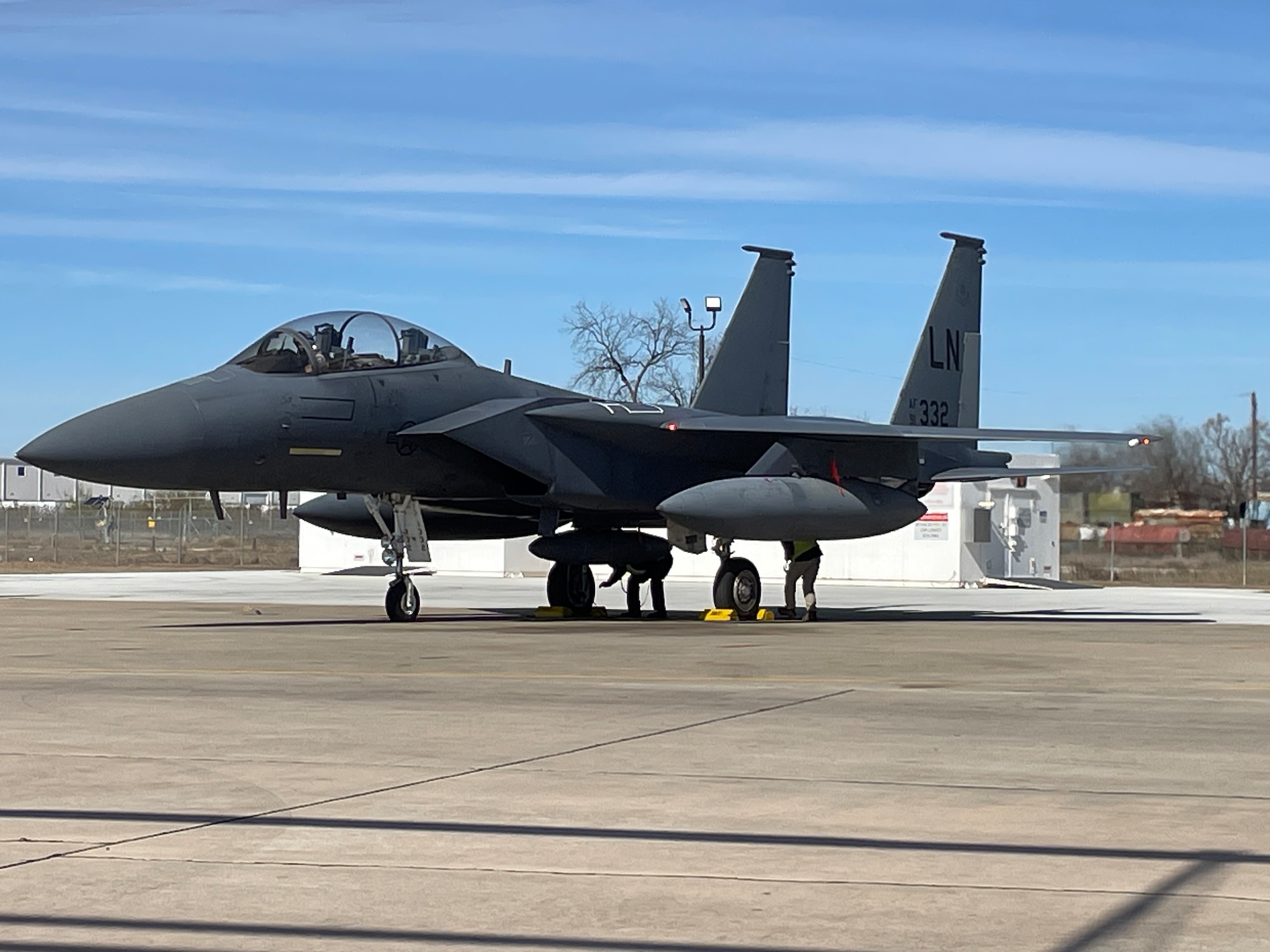
The History of the F-15E Strike Eagle at RAF Lakenheath
The F-15E Strike Eagle’s presence in the UK dates back to February 1992, when the first aircraft arrived at RAF Lakenheath in Suffolk, England. This base, home to the 48th Fighter Wing known as the “Liberty Wing” became the only permanent forward-deployed location for the F-15E outside the United States. Operated by the 492nd Fighter Squadron (“Madhatters” or “Bolars”) and the 494th Fighter Squadron (“Panthers”), these jets have logged thousands of hours in combat and training missions.
Key Milestones in Operations
- Initial Deployment and Gulf War Legacy: Derived from the F-15 air superiority fighter, the Strike Eagle variant was designed for all-weather, deep-strike capabilities. Its dual-role nature air-to-air and air-to-ground made it ideal for operations like Desert Storm, where Lakenheath-based units honed their skills.
- Post-9/11 Engagements: From Afghanistan to Iraq and Syria, F-15Es from Lakenheath participated in Operations Enduring Freedom and Inherent Resolve. Notably, in April 2024, they downed over 70 Iranian drones en route to Israel, showcasing their electronic warfare prowess.
- Recent Upgrades: In January 2025, the base received the first F-15Es equipped with the AN/ALQ-250 Eagle Passive/Active Warning and Survivability System (EPAWSS), enhancing threat detection and countermeasures. This $1.5 billion upgrade program underscores the aircraft’s enduring value, even as retirement looms.
Over the years, approximately 50-52 F-15Es have been stationed at Lakenheath, contributing to NATO exercises and deterrence against Russian aggression in Europe.
Reasons for the F-15E Withdrawal from the UK
The decision to withdraw the F-15E Strike Eagles stems from a broader U.S. Air Force strategy to modernize its fighter fleet amid budget constraints and technological advancements. As Gen. David W. Allvin, USAF Chief of Staff, explained during a May 2025 Senate hearing, this move is about “recapitalizing the force responsibly” by transitioning from fourth-generation to fifth-generation aircraft.
Fleet Modernization and Fifth-Generation Shift
- Aging Aircraft Challenges: Many F-15Es, including those at Lakenheath, are among the oldest in the inventory, with some featuring less efficient F100-PW-220 engines. The USAF aims to consolidate operations around newer models with PW-229 engines for better sustainment and readiness.
- Integration with F-35: RAF Lakenheath is evolving into an all-F-35 base, leveraging the Lightning II’s stealth and sensor fusion. This aligns with U.S. European Command’s (USEUCOM) goal to enhance fifth-generation capabilities in Europe, as stated by Gen. Christopher G. Cavoli in April 2025.
- Strategic Reallocation: With tensions rising in the Indo-Pacific, some F-15Es may redeploy to bases like Kadena in Japan or Diego Garcia, freeing resources for priorities like the F-15EX Eagle II.
Cost Savings and Efficiency
- Budgetary Pressures: The USAF’s FY2026 posture seeks to divest older jets to fund modernization. Congress has limited retirements through the FY2024 National Defense Authorization Act (NDAA), allowing only “uneconomical to repair” aircraft to be phased out up to 68 by FY2029.
- Training Consolidation: Relocating to Seymour Johnson AFB in North Carolina would centralize F-15E and F-15EX training, reducing logistical overhead. This base currently hosts units with older engines, making Lakenheath’s advanced jets a perfect fit.
From my expertise in military procurement, these decisions often involve tough trade-offs: while the F-15E’s heavy payload (up to 23,000 pounds) is unmatched, the F-35’s low observability offers superior survivability in contested environments.
Detailed Timeline of the F-15E Withdrawal
The withdrawal is tied to the F-35 rollout at Lakenheath, ensuring no capability gaps. Here’s a step-by-step breakdown based on official statements:
- Current Status (December 2025): Two F-35 squadrons the 493rd (“Grim Reapers”) and 495th (“Valkyries”) are operational or nearing full capability. The second squadron achieves full operational status by fall 2025.
- 2026-2027 Phase-Out Initiation: F-15E operations begin winding down, starting with the 492nd FS inactivation in 2027. Aircraft return to the U.S. progressively.
- 2028-2029 Full Transition: The 494th FS phases out F-15Es by 2028, potentially transitioning to F-35As in 2029, forming a third squadron. All F-15Es are expected to depart by FY2028.
- Long-Term Fleet Goals: USAF plans to reduce its 218 F-15Es by 119 by FY2028, focusing on PW-229-equipped models. Congressional approval could accelerate or delay this.
[DATA SOURCE: USAF FY2026 Budget Posture and Senate Hearings]
Delays in F-35 deliveries due to Tech Refresh 3 software issues could extend the timeline, but infrastructure investments ($148.4 million since 2018) at Lakenheath support a smooth handover.
The Replacement: F-35A Lightning II at RAF Lakenheath
The F-35A is set to fully replace the F-15E, bringing advanced stealth and multirole capabilities to the UK. First arrivals occurred in December 2021, with 52 aircraft planned across potentially three squadrons.
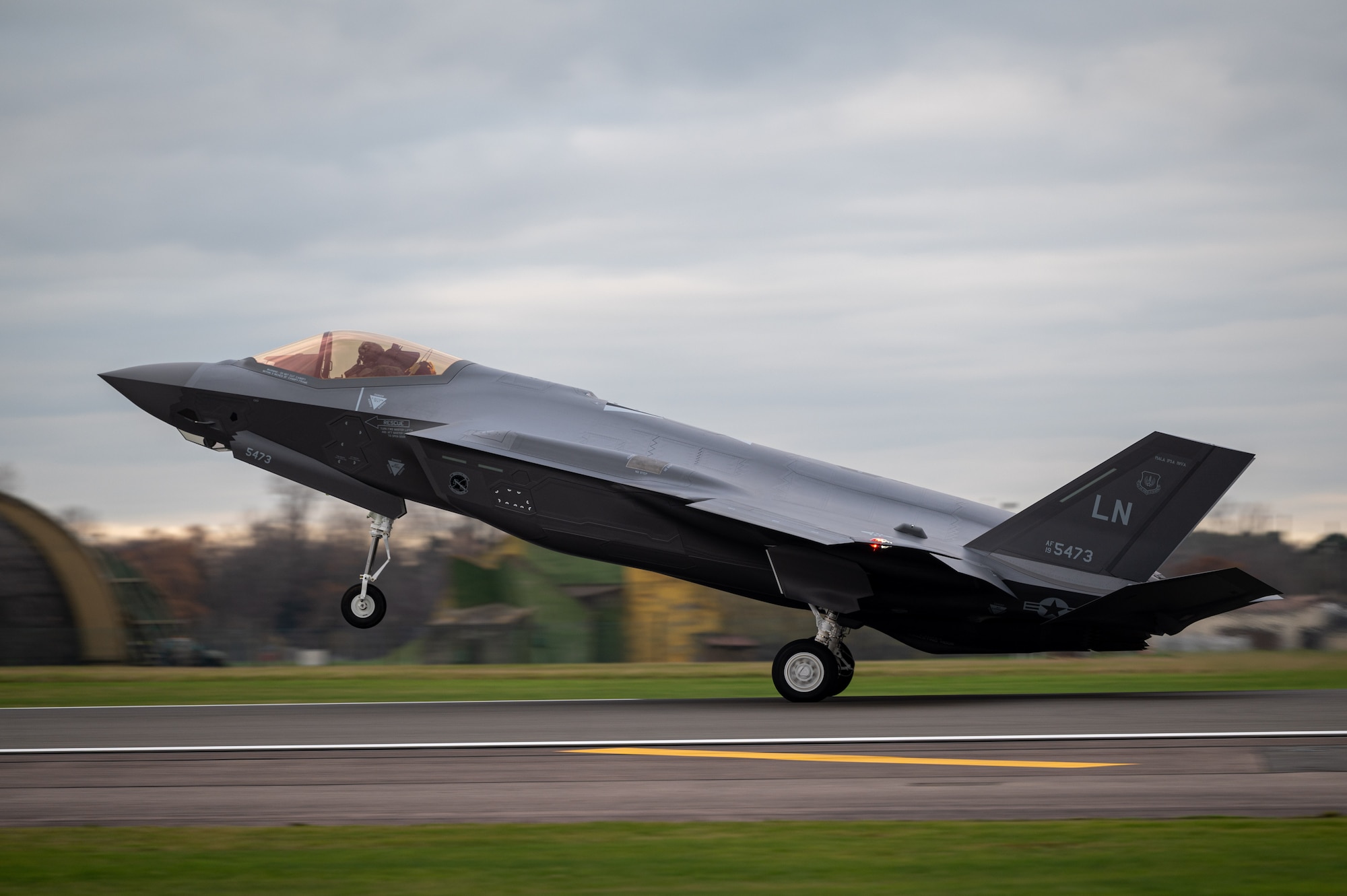
Advantages of the F-35 Transition
- Stealth and Sensor Fusion: Unlike the F-15E, the F-35’s low radar cross-section allows penetration of advanced air defenses, ideal for NATO’s eastern flank.
- Interoperability: Integrated with allies’ F-35s (e.g., UK, Norway), it enhances joint operations through shared data links.
- Combat Proven: With over 1,000 aircraft delivered globally, the F-35 has seen action in the Middle East, complementing the F-15E’s legacy.
Lt. Col. Timothy Causey of the 494th FS noted that combining EPAWSS-upgraded F-15Es with F-35s creates a “powerful force multiplier” a synergy that will persist during the overlap.
However, the F-35’s higher maintenance costs and shorter range (1,200 nautical miles vs. F-15E’s 2,400 with tanks) require strategic adjustments.
Implications for UK Defense and NATO Air Power
This withdrawal reshapes European security, balancing gains in stealth with potential shortfalls in strike capacity.
Positive Impacts
- Enhanced Deterrence: An all-F-35 base strengthens NATO’s fifth-generation presence, deterring aggression from Russia or other actors.
- UK-U.S. Alliance: The UK Ministry of Defence supports the move, as it aligns with Britain’s own F-35B operations on carriers like HMS Queen Elizabeth.
- Economic Benefits: Lakenheath’s upgrades create jobs and boost local economies in Suffolk.
Potential Challenges
- Capability Gaps: The F-15E’s superior bomb load and speed (Mach 2.5) may leave voids in long-range strikes, concerning allies like Poland and the Baltics.
- Indo-Pacific Shift: Redeploying assets eastward could strain European commitments, though USEUCOM assures sustained support.
- Congressional Scrutiny: Proposed FY2026 funding ($127.46 million) to prevent retirements highlights debates over fleet size amid global threats.
In my analysis of similar transitions (e.g., F-15C to F-35), the key is robust training expect increased NATO exercises to mitigate risks.
Technical Comparison: F-15E Strike Eagle vs. F-35A Lightning II
To appreciate the shift, consider this side-by-side analysis:
| Feature | F-15E Strike Eagle | F-35A Lightning II |
|---|---|---|
| Role | Multirole fighter-bomber | Stealth multirole fighter |
| Top Speed | Mach 2.5 | Mach 1.6 |
| Range | 2,400 nautical miles (with tanks) | 1,200 nautical miles |
| Payload | 23,000 lbs | 18,000 lbs (internal/external) |
| Engine | 2x F100-PW-229 (29,000 lbs thrust each) | 1x F135-PW-100 (43,000 lbs thrust) |
| Radar/EW | APG-82 AESA, EPAWSS | APG-81 AESA, integrated EW suite |
| Cost per Unit | ~$80 million | ~$78 million (recent lots) |
| Inventory (USAF) | 218 (as of 2025) | Over 500 (growing) |
[DATA SOURCE: USAF Fact Sheets and Jane’s Defence]
The F-35 excels in survivability, while the F-15E dominates in raw power a complementary duo during transitions.
Expert Insights on Future U.S. Air Power in Europe
Drawing from decades of observing USAF strategies, this withdrawal isn’t a retreat but a realignment. The F-15EX, with its advanced radar and hypersonic weapon compatibility, could eventually supplement F-35s if needed. For aviation enthusiasts, monitor deployments to Aviano or Spangdahlem for interim F-15 support.
[EXTERNAL LINK: U.S. Air Force Official Website – Fighter Aircraft]
Frequently Asked Questions (FAQs)
What is the reason for the F-15E Strike Eagle withdrawal from the UK?
The USAF is modernizing its fleet by replacing fourth-generation F-15Es with fifth-generation F-35s to improve stealth and efficiency.
When will the F-15E be fully withdrawn from RAF Lakenheath?
Withdrawal begins after F-35 full operational capability in fall 2025, with phase-out starting 2027 and completion by 2028-2029.
What aircraft will replace the F-15E at RAF Lakenheath?
The F-35A Lightning II, with two squadrons already operational and a potential third by 2029.
How does this affect NATO and UK security?
It enhances stealth capabilities but may create gaps in strike range; NATO exercises will ensure continuity.
Where will the withdrawn F-15Es be relocated?
Likely to Seymour Johnson AFB in the U.S. for training consolidation, though final decisions are pending.
Has the F-15E received recent upgrades before withdrawal?
Yes, including EPAWSS in January 2025, boosting electronic warfare for remaining operations.
What is the total number of F-15Es at RAF Lakenheath?
Approximately 50-52 aircraft across two squadrons.